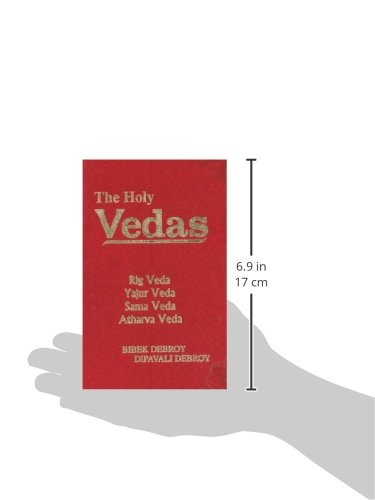
Vedas Malayalam
Nov 9, 2013 - Jesus Christ revealed from the Hindu Vedas - Many people in India say that Jesus Christ was a great saint who founded the Christian Religion.
The Vedas are considered the earliest literary record of Indo-Aryan civilization. It is the most sacred scriptures of India. They were meant to be mantras (incantations) in praise of various Aryan gods, it being the age when the Aryans were finding their feet in India. What they also reflect is a startlingly vivid picture of life. Vedas are the treasure troves containing spiritual knowledge encompassing all aspects of our life.
Digital Deluxe Edition The Digital Deluxe Edition Includes: Nuketown 2025 Bonus Map – Relive the close quarters chaos of this classic fan-favorite map re-imagined in a 1960s visionary depiction of the “model home of the future.” Nuketown Zombies Bonus Map – Battle hordes of Zombies in this beloved 1960s nuclear neighborhood. Black ops 2 corrupt setup file. Goyer (co-writer of The Dark Knight Rises), Trent Reznor (Academy Award-winning composer of The Social Network), join Studio Head, Mark Lamia and the game’s Director, Dave Anthony, to discuss the relationship between movies, music and games, as well as the creative process behind Call of Duty®: Black Ops 2. Learn about weapons & technology, the campaign, graphics, multi-player and the return of Black Ops zombies To create a game like Call of Duty®: Black Ops 2, Treyarch assembled some of the greatest talents in the world.
Vedic literature with its philosophical maxims has stood the test of time and is the highest religious authority for all sections of Hindus in particular and for mankind in general. The word Veda means wisdom, knowledge or vision, and it is revered as the language of the gods in human speech. The essence of the Vedas is to regulate the social, legal, domestic and religious customs of the Hindus which is meticulously pursued to the present day.
All the rituals of Hindus conducted upon birth, marriage, death etc. Are based upon Vedic doctrines and they are being followed from time immemorial. PERIOD OF THE VEDAS The Vedas are probably the earliest documents of the human mind. As the ancient Hindus seldom kept any historical record of their religious, literary and political realization it is indeed difficult to precisely say when the earliest portions of the Vedas came into existence and what is their period.
Historians provide us many guesses but none of them is free from ambiguity. However it is believed that it is in 1200 B.C., when the first Aryan immigrants in India started composing the various hymns that are part of the books. The Rig Veda is said to be date back to 1500 B.C. Some scholars date the Rig Veda as early as 12000 B.C. The traditional date goes back to 3000BC, something which the German scholar Max Mueller accepted.
Inspite of the controversy over the period of Rig Veda going on for long time, modern historians have now reached a consensus that its oldest parts were written around a 1200 B.C. The Sama Veda, Yajur Veda and Atharva Veda were compiled after the age of the Rig Veda and are ascribed to the Vedic period. THE FOUR VEDAS The Rig Veda: The Book of Mantra The Rig Veda is a collection of brilliant songs or hymns and is a main source of information in detail on the social, religious, political and economic background of the Rig-Vedic civilization. It is the oldest book in any Indo-European language and contains the earliest form of all Sanskrit mantras. Even though some of the hymns of Rig Veda characterize monotheism (belief in the existence of one god), naturalistic polytheism (belief in more than one god,) and monism (belief of different paths to the one god), in general, can be found in the hymns of Rig Veda. The Rig-Vedic 'samhita' (collection of mantras) consists of 1,017 'suktas' (hymns) divided into eight 'ashtakas' (songs) each having eight 'adhyayas' (sections), which are sub-divided into various groups with a total of about 10,600 stanzas.
The hymns are collection of the work of many authors called 'rishis' (according to post Vedic tradition 'seers'). Atri, Kanwa,Vashistha, Vishwamitra, Jamadagni, Gotama and Bharadwaja are considered as the seven primary seers. The hymns are devoted to thirty-three different gods, most of them nature gods like Indra (rain god), Agni (fire god), Rudra (storm god) etc. A sizeable chunk of the verses are also dedicated to Soma (air god). The Sama Veda: The Book of Chant. The Sama Veda is purely a collection of 'samans' (chants) derived from the eighth and ninth books of the 'original Veda', the Rig-Veda.
The hymns in the Sama Veda, used as musical notes have no distinctive lessons of their own. Hence, its text is a reduced version of the Rig Veda.
Vedic Scholar David Frawley says that if the Rig Veda is the word, Sama Veda is the song or the meaning, if Rig Veda is the knowledge, Sama Veda is its realization, if Rig Veda is the wife, the Sama Veda is her husband. Sama Veda was meant for the priests who performed the rituals of the soma ceremonies [rituals of the threefold realm of life & death (samsara)].